
India Could Upgrade Russia’s Su-57 Fighter With Indigenous Systems If Deal Moves Forward
India could significantly enhance Russia’s Su-57E stealth fighter with indigenous radars, weapons, and avionics if New Delhi decides to acquire the platform.

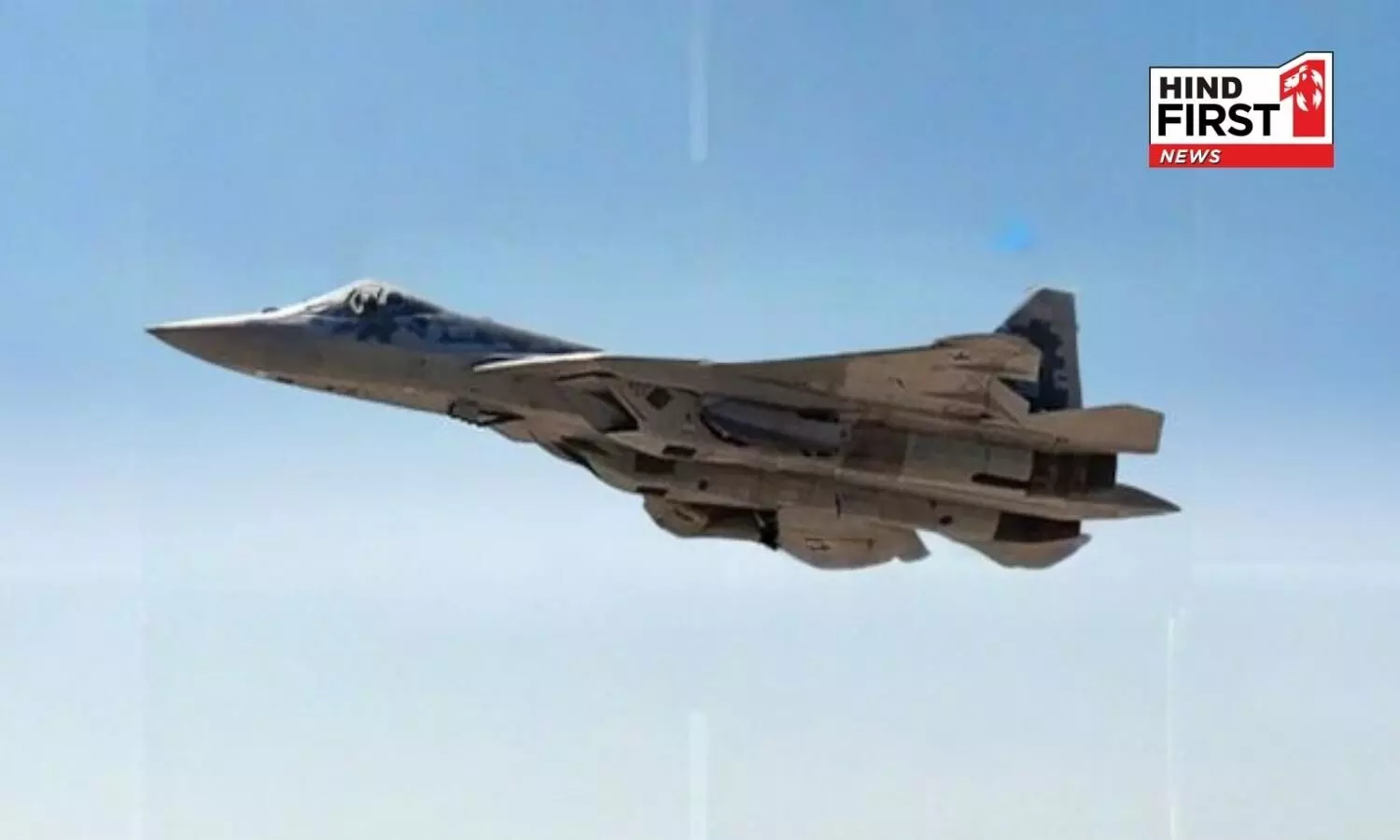
India could significantly enhance the capabilities of Russia’s fifth generation Sukhoi Su-57 stealth fighter through indigenous avionics, radar and weapons integration if New Delhi proceeds with acquiring the export variant.
The aircraft, developed by Russia’s Sukhoi, has faced criticism for its limited role in the ongoing Russia Ukraine War. Reports indicate the fighter has largely launched long range missiles from safer distances instead of operating in heavily defended airspace.
Defence analysts say this has raised questions about the aircraft’s survivability against modern air defence systems. Critics have pointed to design aspects such as exposed engine faces, inlet shaping and a comparatively larger radar cross section than stealth fighters like the F-22 Raptor and F-35 Lightning II.
India is evaluating the export variant known as the Su-57E. If acquired, the aircraft could be upgraded with several indigenous technologies developed under the government’s Aatmanirbhar Bharat initiative aimed at boosting defence self reliance.
Indigenous Radar And Avionics Could Boost Performance
Indian upgrades could include replacing Russian avionics with systems developed by the Defence Research and Development Organisation. These may include advanced mission computers, electronic warfare suites and indigenous radar systems.
Two radar systems are under consideration. The Uttam AESA Radar is a compact radar designed for the HAL Tejas Mk 1A fighter. The Virupaksha AESA Radar is a more powerful radar designed for upgrades to the Sukhoi Su-30MKI.
The Virupaksha radar, developed by DRDO’s Electronics and Radar Development Establishment, uses over 2,500 gallium nitride transmit receive modules. The radar is designed for long range detection, electronic warfare capability and simultaneous tracking of multiple targets.
The system supports synthetic aperture radar imaging for ground mapping and precision strike operations. It also includes electronic counter countermeasure capability and low probability of intercept features to reduce detection by enemy sensors.
HAL Production And Local Assembly
Russia has reportedly offered India access to the aircraft’s source codes and the option for local manufacturing at facilities of Hindustan Aeronautics Limited.
HAL’s Nashik facility, which has experience assembling the Su-30MKI fleet, could be used for local assembly of the Su-57E. Initial aircraft may be delivered directly while domestic production infrastructure is established.
Indigenous Weapons Integration
India could also integrate several indigenous weapons on the platform. These may include the Astra Beyond Visual Range Missile, Rudram Anti Radiation Missile, and precision weapons such as the Smart Anti Airfield Weapon.
Future variants of the BrahMos Supersonic Cruise Missile could also be integrated. Analysts say such weapons would allow the aircraft to perform suppression of enemy air defence missions and long range strike operations.
The planned upgrade of the Su-30MKI fleet under the Super Sukhoi Upgrade Program is seen as a model for integrating foreign airframes with Indian avionics and weapons.
Strategic And Operational Considerations
A customised Su-57E could operate alongside aircraft such as the HAL Tejas and upgraded Su-30MKI fighters in a network centric combat environment.
Secure data links and indigenous identification friend or foe systems could help maintain operational data sovereignty. This is considered important for missions near borders with China and Pakistan.
The aircraft could also complement India’s indigenous fifth generation fighter project, the Advanced Medium Combat Aircraft program.
However, any deal could face geopolitical challenges including potential sanctions under the Countering America's Adversaries Through Sanctions Act. India previously received waivers for the purchase of the S-400 Triumf Missile System from Russia.
Defence analysts say cooperation between Russia and India could involve Russia focusing on airframe and propulsion development while India contributes avionics, electronics and weapons integration.
Such collaboration could allow India to field a customised stealth fighter while expanding domestic defence technology capabilities.
Aakash Khuman


Credible. Clear. Impactful
