
JEE Main Session 2 2026: Important Guidelines, Exam Pattern and Last Minute Tips
JEE Main 2026 session 2 begins tomorrow. Check key tips on time management, admit card rules and last minute preparation.

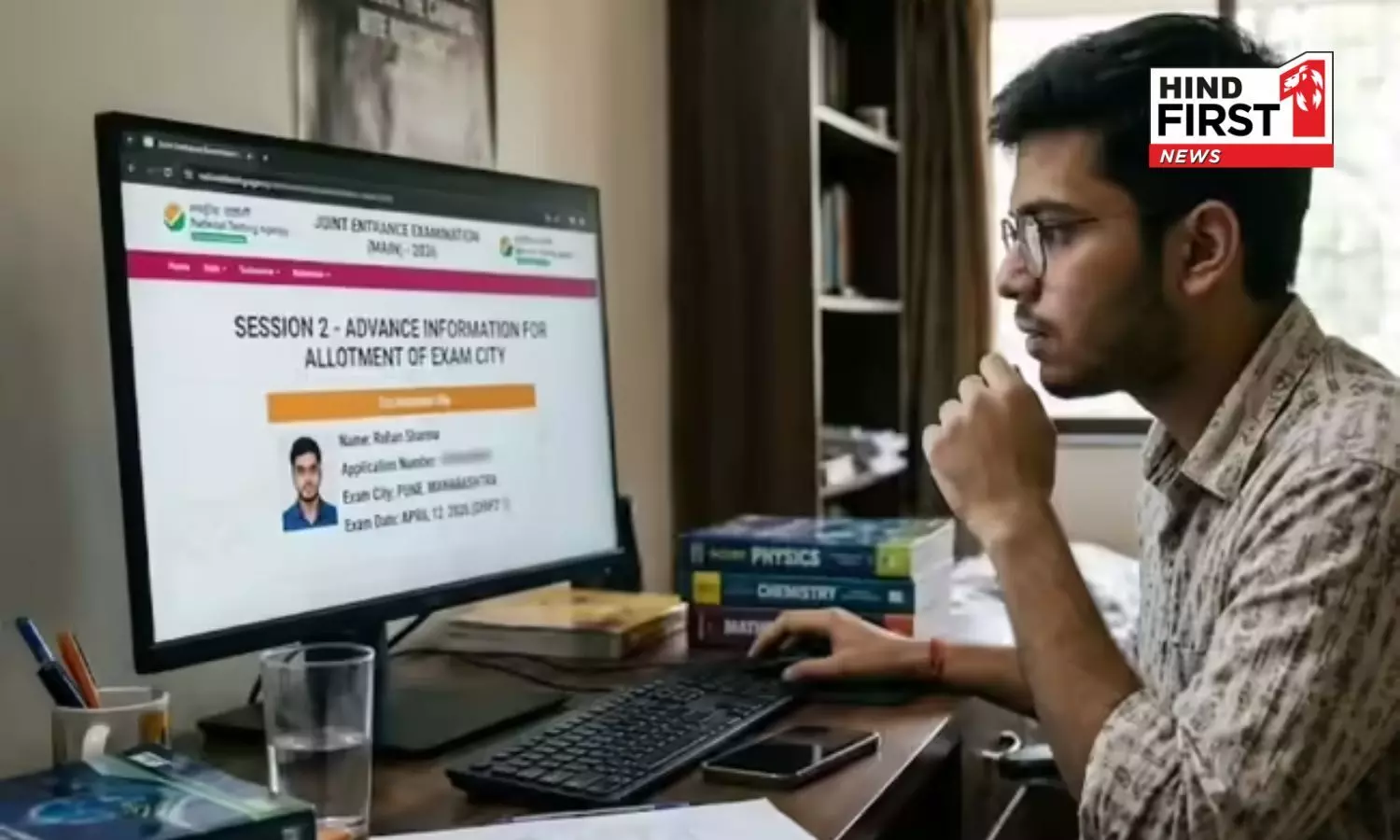
As the JEE Main 2026 session 2 examination begins tomorrow, lakhs of students across the country will appear for the national level engineering entrance test.
The exam serves as a gateway to premier institutes such as IITs, NITs and IIITs, making strategic preparation essential for candidates.
Follow admit card instructions and plan travel
Candidates should carefully read all instructions mentioned on their admit card to avoid last minute confusion. They are advised to leave early for the examination centre with sufficient buffer time. Late arrival may lead to stress or denial of entry.
Maintain health and reduce stress
Along with academic preparation, candidates should focus on physical and mental well being. A balanced diet, proper sleep and stress management practices such as yoga or meditation can help improve concentration and performance.
Manage time effectively during the exam
Time management remains crucial during the test. Candidates should attempt easier questions first and avoid spending more than one to two minutes on a single question. The last few minutes should be reserved for revision.
Understand the exam pattern
JEE Main includes three subjects, Physics, Chemistry and Mathematics. The paper has 90 questions, out of which 75 need to be attempted. The total marks are 300, with four marks for each correct answer and one mark deducted for each incorrect response.
Follow a realistic study plan
Experts advise maintaining a balanced study schedule. Candidates should study in focused slots of two to three hours and ensure equal attention to all subjects along with regular revision.
Focus on NCERT fundamentals
NCERT textbooks of Classes 11 and 12 form the base of preparation. Many questions, especially in Chemistry, are based on NCERT concepts. After building clarity, candidates can refer to advanced material.
Practice previous year papers
Solving previous years’ question papers helps candidates understand the pattern and identify important topics. Experts recommend practising at least the last 10 years of papers.
Take mock tests regularly
Mock tests help simulate real exam conditions and improve speed and accuracy. They also allow candidates to identify weak areas and improve performance.
Revise consistently
Regular revision helps in better retention. Candidates should revise formulas and key notes daily and follow a weekly revision plan.
With the session 2 exam set to begin, experts say a calm approach, clear concepts and effective strategy can improve performance.
Aakash Khuman


Credible. Clear. Impactful
