
Flowers of This Plant Change Color Every Day—Learn How to Grow It at Home
Imagine a plant whose flowers change their color with each passing day. When these flowers begin to bloom, the entire branch becomes laden with blossoms, making the plant look incredibly beautiful.

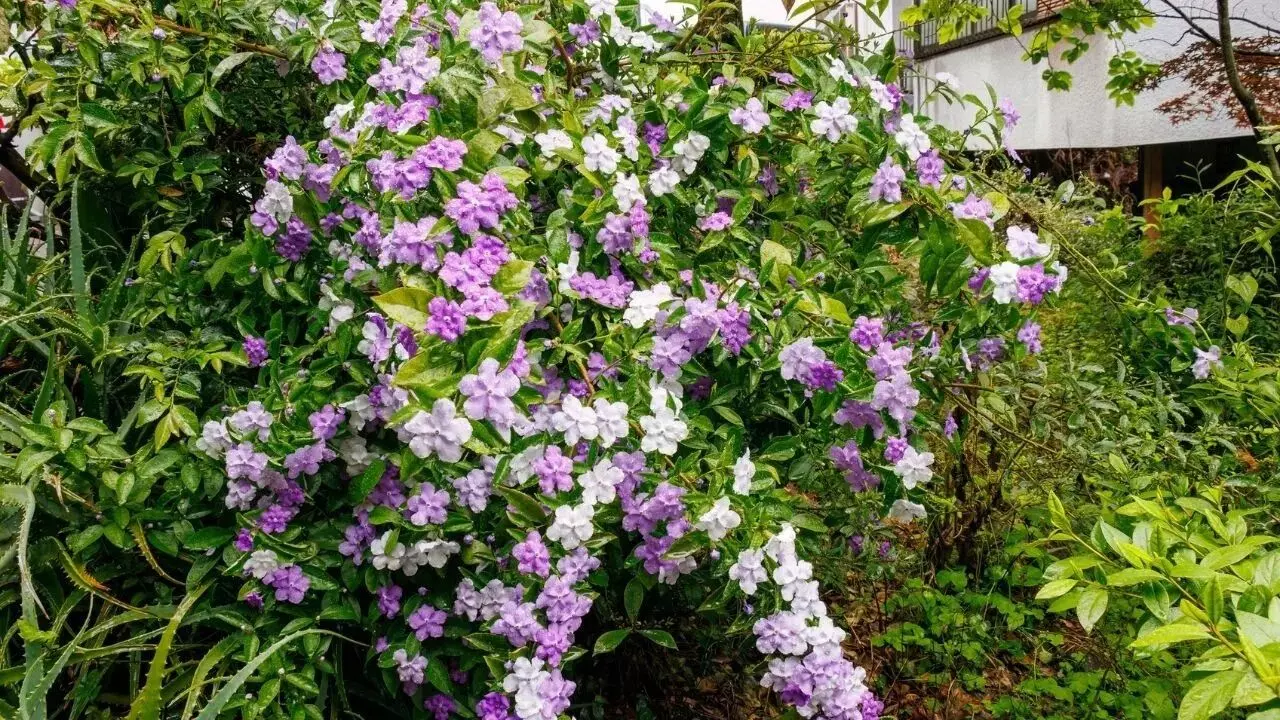
You have likely seen many beautiful flowering plants or trees in your lifetime, but what if a single plant bore purple flowers one day, then lavender, and eventually—the very same flowers—began to appear white? The "Yesterday, Today, and Tomorrow" is a unique plant whose flower color transforms day by day. It is also scientifically known as *Brunfelsia pauciflora*. This plant is not only visually stunning but also evergreen, meaning it produces flowers in every season. You can grow it in a pot on your home's balcony, or—if you have a garden—you can plant several of them in a row to create a lush floral border that will significantly enhance the beauty of your home.
It is aptly named "Yesterday, Today, and Tomorrow." So, let's find out how you can grow this fascinating plant in your own home.
‘Brunfelsia pauciflora’ is native to South America, where it is also known as the "Rain Tree" in Brazil. While it blooms most profusely during the spring season, it continues to produce flowers throughout the year whenever weather conditions are favorable. The best part is that this plant is not merely a visual delight; it will also fill your home with a delightful fragrance. It emits a particularly lovely scent during the nighttime hours. Now, let's learn how to grow it.
Preparing the Soil and Pot
For the *Brunfelsia pauciflora* plant, you require fertile yet slightly acidic soil—specifically a mix that is rich in organic matter and offers excellent drainage. To prepare the soil mix, combine 2 parts garden soil, 1 part organic compost or vermicompost, 1 part sand or perlite, and 1 part cocopeat or peat moss. Mix all the ingredients together to prepare the soil.
Cultivation and Care: It's Easy!
Growing or caring for this plant is not particularly difficult. It thrives exceptionally well in tropical climates—that is, in warm weather conditions. Although it prefers dappled sunlight, this plant can also survive in direct sunlight. During scorching hot periods, it is advisable to place the plant in a location where it receives shade from a tree or is situated alongside other, taller plants.
How to Plant?
To grow *Brunfelsia pauciflora*, you will need a mature cutting (stem) that is at least 8 inches long—meaning it should feel firm to the touch. Remove all the leaves from the cutting, leaving only the top two leaves intact. Make a slanted cut at the base of the stem, then place it inside a small plastic bag filled with the prepared, moist soil. If you are using a rooting hormone, dip the cut end of the stem into the hormone before planting it in the soil.
Plant the cutting at a depth of at least three inches. Afterward, cover the cutting with a plastic bag or sheet, ensuring that the plastic does not come into direct contact with the cutting itself. You may use a chopstick or a small stick to provide support and keep the plastic elevated. Keep the plant in an area with mild, indirect light; roots should begin to emerge within 4 to 5 weeks. Once rooted, you can remove it from the bag and transplant it into a pot.
Fertilizers and Pest Control
To keep the plant healthy—and to encourage an abundance of blooms—you should apply fertilizer periodically. For this purpose, use a fertilizer that is rich in phosphorus. Pests such as spider mites can drain nutrients from the plant's leaves; to prevent this, mist the leaves lightly with water while simultaneously watering the roots.
Pruning
Generally, this plant grows quite vigorously, so you will not need to perform extensive cutting or pruning. Simply keep removing yellow leaves and withered flowers so that other flowers can grow.


