
Why Everything Online Feels Like a Trend: Ria Chopra Explains Digital Churn
Author Ria Chopra says trends are not new, but their speed and visibility have increased in the social media age.
When the Nihilistic Penguin began circulating widely online, it joined a series of short lived internet trends. One week it is a character. The next week it is a sound bite, filter, or aesthetic. The rapid churn has raised questions about why everything online feels like a trend.
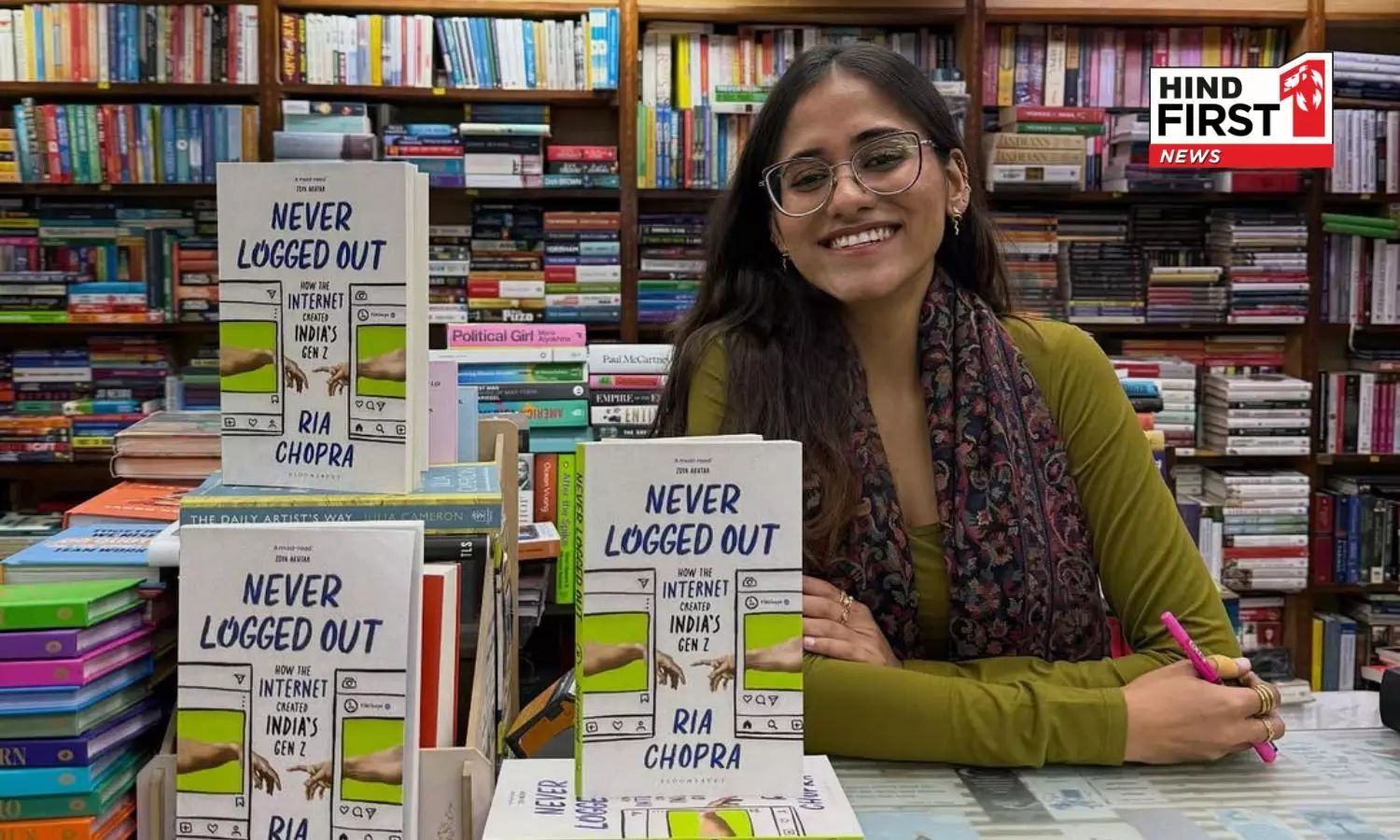
Speaking at the Hyderabad Literary Festival, author Ria Chopra said the issue is not the existence of trends but the pace at which they change. Siasat.com spoke to Chopra, who describes herself as a neighbourhood internet anthropologist and is the author of Never Logged Out: How the Internet Created India’s Gen Z.
“We are looking too closely at specific trends,” she said, “Trends have always existed. What’s changed is their shelf life.”
The changing pace of social media
Chopra said social media volume has increased sharply over the years.
“The volume of social media has increased,” she tells Siasat.com, “Earlier, one meme lasted months. Now there’s something new every day.”
She noted that while individual memes may fade, some cultural shifts remain. She cited the term situationship as an example of vocabulary that has persisted beyond its initial trend cycle.
In her book, Chopra argues that for Gen Z in India, the internet plays a formative role in shaping language, identity, and behaviour.
“Things that stick, stick,” she says. “Trends have always come and gone. But long-term developments stay.”
From cinema influence to GRWM videos
Chopra said trends have existed across decades, including in fashion and film. She pointed to the popularity of bell bottom trousers in the 1970s following films of Amitabh Bachchan. She also referred to the “Sadhana cut” hairstyle popularised by Sadhana Shivdasani in the 1960s, and fashion inspired by Dimple Kapadia after the film Bobby.
“I have seen photos of my dad and uncles wearing bell-bottoms because that was the trend at the time. In fact, the “Sadhana cut” became a huge thing in the 1960s because of the actress Sadhana Shivdasani. Similarly, after Bobby, dressing like Dimple Kapadia became aspirational. So fashion and beauty have always been a trend”, she says.
She added that earlier audiences consumed trends, while today they can also participate in creating them.
“If we watched a movie earlier, we couldn’t be in it. Now, if we watch a GRWM video, we can make one too.”
Performance and intention
Chopra said performance is not limited to social media.
“I perform in real life too,” she says matter-of-factly. “I am different with my parents than with my friends. I code-switch depending on where I am.”
She stressed the need for reflection.
“I think it is important to aspire for a life as true to yourself as possible. Who are we trying to keep happy when we perform on social media? Is it ourselves or is it other people? Whose approval do we seek? Whose attention do we seek by posting on Instagram? I think those most philosophical questions are the ones we need to start asking ourselves. Once we think about them, it will lead to healthier behaviour,” she explains.
Trend exhaustion and what lies ahead
Chopra said many young users are experiencing trend exhaustion, especially around rapidly shifting aesthetics and online identities. She noted that even movements toward offline living often become content themselves.
On whether the cycle will slow down, she remained cautious.
“I don’t know, actually, if this will end or not,” she admits. “I hope this exhaustion leads to something good, but I’m not sure.”
Her book does not frame the internet as entirely negative. Instead, it calls for greater awareness about how digital culture shapes individuals and how conscious participation can influence behaviour.
Aakash Khuman


Credible. Clear. Impactful
