
Iranian Currency Has Collapse: A Lifetime of Savings is Turning into Waste Paper!
Sanctions, war, and political instability have devastated the Iranian economy and its currency. The value of the currency in Iran has now plummeted to the level of scrap paper.

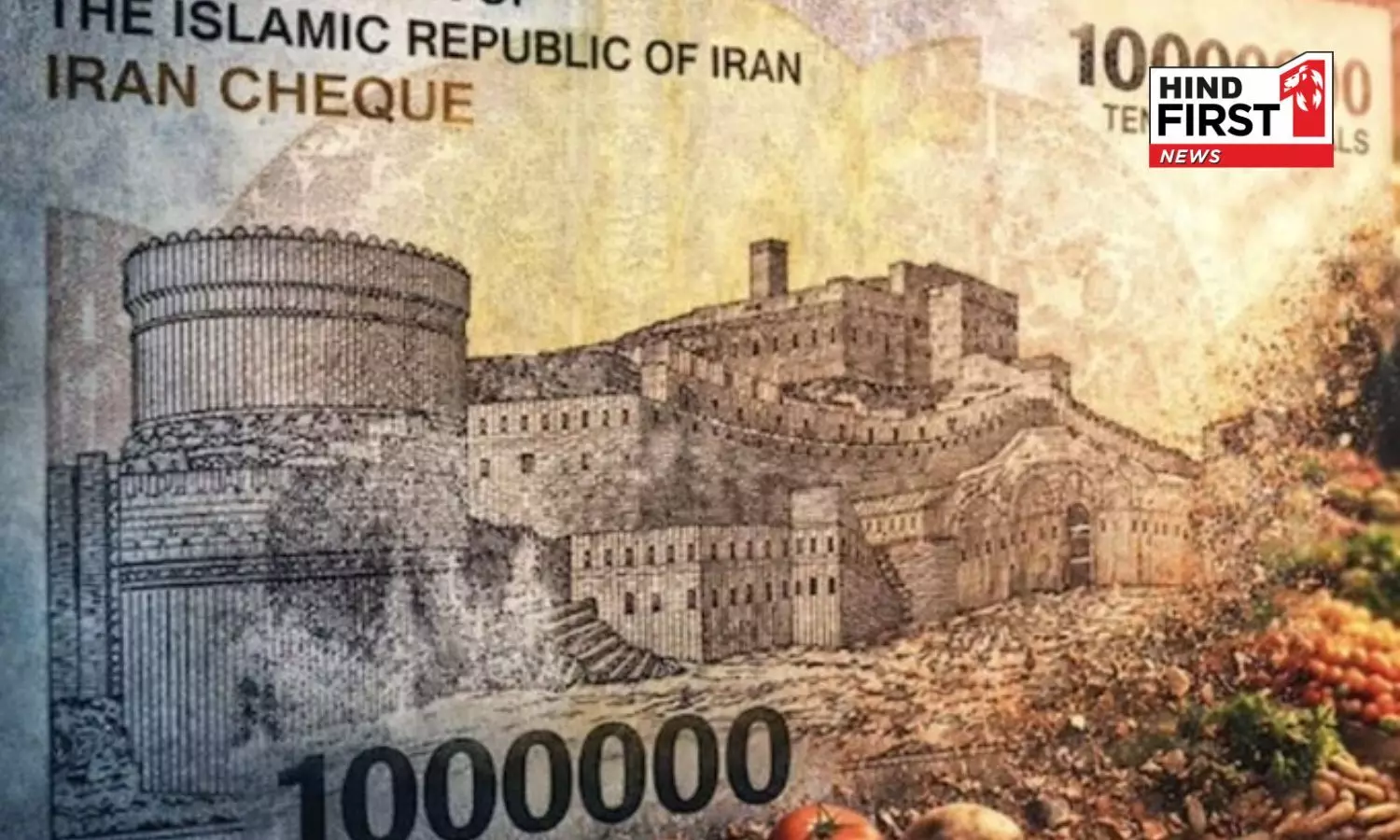
Amidst the ongoing conflict, the value of the Iranian currency has effectively become worthless. Iran has now issued a banknote worth 10 million Iranian rials. Just a few days prior, Iran had issued currency notes worth 5 million rials (half a crore). However, the condition of the Iranian currency is so dire that these notes failed to meet the needs of the market or the general public. The official currency of Iran is the Iranian rial.
In an attempt to cope with this crisis, the country's central bank has issued a banknote worth 10 million rials. However, the value of 10 million Iranian rials in Indian currency amounts to a mere 713 rupees.
War and political instability have devastated the Iranian economy
Following this, Iran proceeded to issue the 10-million-rial banknotes. Yet, even this massive denomination is unlikely to improve the plight of the Iranian people, as the inflation rate in Iran currently stands at an all-time high. You might naturally assume that if you were to go shopping in Iran with this 10-million-rial note, you would be able to fill an entire truck with goods. However, if that is what you think, you are entirely mistaken. In Iran, even after spending 10 million rials, you would not be able to fill even a single shopping bag. This is because, when compared to the Indian rupee, the value of 10 million Iranian rials falls somewhere between 600 and 725 rupees.
Value of 10 million Iranian rials in Indian currency amounts to a mere 713 rupees.
Yes, you heard that right. 10 million Iranian rials are equivalent to approximately 715 Indian rupees; furthermore, if you were to convert 10 million Iranian rials into US dollars, you would receive a mere 7 dollars.
The value of one US dollar in Iran currently stands at approximately 1.315 million (13 lakh 15 thousand) Iranian rials. This is precisely why Iran is being compelled to issue banknotes of extremely high denominations to keep its economy running.
What can you buy in Iran with 10 million Rials?
If you possess 10 million Rials in Iran, in terms of Indian currency, you effectively hold between 700 and 725 rupees.
Currently, the price of flour in Iran has soared to 520,000 Rials per kilogram. In many places, rice is selling for as much as 200,000 Rials per kilogram.
Staples such as milk, eggs, and chicken have also been severely impacted by this rampant inflation. Milk, for instance, is currently selling for 600,000 Rials per liter in Iran.
How much can 10 million Iranian Rials actually buy?
If an Iranian individual heads to a bakery or flour shop with 10 million Rials to purchase provisions for a family of four, hundreds of thousands of Rials are consumed just in the purchase of bread alone. Many families report that they spend approximately 1 million Rials solely on buying bread.
Subsequently, if that individual considers purchasing items like rice, lentils, or eggs, they quickly realize that even basic necessities—such as vegetables, cooking oil, and milk—have seen their prices skyrocket by anywhere between 60% and 100% over the past few months.
Why is inflation in Iran reaching astronomical levels?
Iran's economy has been under severe strain for several years; however, this crisis reached its absolute peak during the 2025–2026 period. In December 2025, the overall inflation rate hit 42.5%, while some reports indicate that inflation specifically for food and beverages has exceeded 70%. Currently, Iran is experiencing its highest level of inflation since the end of the Second World War.
In December 2025, the value of one U.S. dollar stood at 1.4 million Iranian Rials.
U.S. Sanctions Cripple the Iranian Economy
Iran was already grappling with stringent sanctions imposed by the United States, Europe, and the United Nations. The U.S. and European powers have imposed particularly severe sanctions on Iran in response to its nuclear program and ballistic missile development program. Any country wishing to conduct business with the United States is prohibited from engaging in any trade—buying or selling—with Iran. This is the mandate of U.S. sanctions. Consequently, India had ceased purchasing crude oil from Iran.
Iran is a major global oil producer; however, due to these sanctions, it was unable to sell its oil to any buyer. As a result, Iran faced a severe shortage of foreign currency—specifically, U.S. dollars. With revenue from oil sales plummeting, the government's treasury was depleted.
Summary
To meet domestic requirements, the Iranian government began printing currency notes in massive denominations. A fundamental economic principle dictates that if the volume of printed currency increases while the production of goods and services remains low, inflation is bound to skyrocket. Iran has fallen victim to precisely this phenomenon.


