
No More Battery Anxiety! Electric Cars That Charge Themselves While Driving—How REEVs Work
People often harbor a persistent fear regarding electric cars: what happens if the battery runs out while on the road? While driving these vehicles, one often finds oneself wishing for a power backup system.

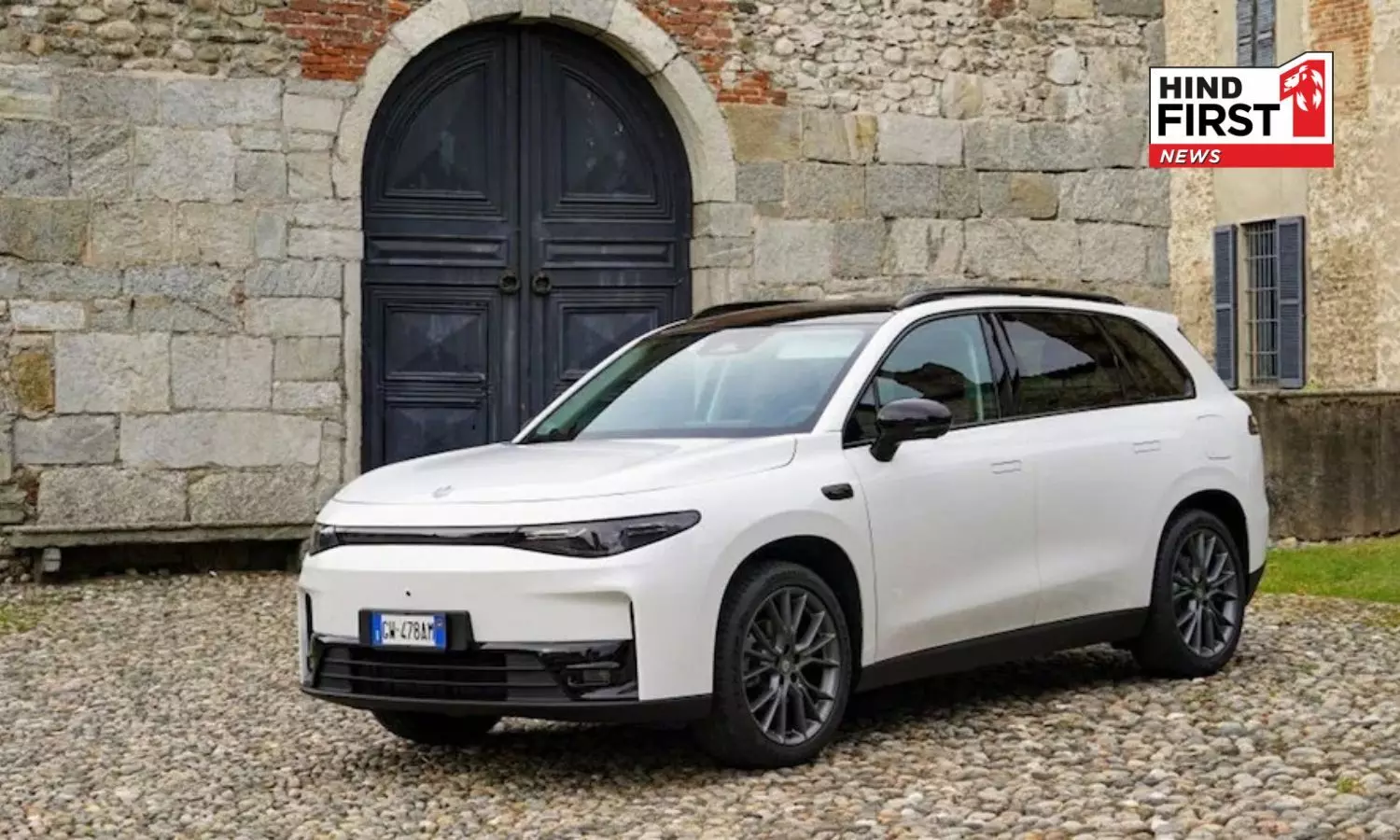
Globally, various technologies are being developed to enhance the fuel efficiency of automobiles. Electric cars are widely regarded as the future of transportation. While automotive companies have placed significant bets on EVs, consumers have not yet fully embraced them—or at least, sales figures suggest as much. In the Indian market, for instance, Maruti has launched only one electric car to date.
Such a power backup is precisely what is found in Range Extender Electric Vehicles (REEVs). This technology could encourage more people to switch to EVs, yet it differs significantly from standard hybrid vehicles.
Meanwhile, the portfolios of some companies do not feature a single electric vehicle. A major reason for this consumer reluctance toward EVs is "range anxiety"—the fear that the car might suddenly grind to a halt somewhere along the journey, displaying a "low battery" or "0% power" warning on the dashboard screen. In light of this, several companies are focusing their efforts on hybrid technologies.
One such technology involves Range Extender Electric Vehicles (REEVs), which can be viewed as an extension or evolution of standard EVs. However, this technology operates differently from that of conventional hybrid cars.
What Exactly Are REEVs?
While a hybrid car operates using both an internal combustion engine and a battery, a Range Extender vehicle runs exclusively on battery power. You can think of it as a specific type of electric car that features an onboard engine designed solely to recharge the battery. This engine does not propel the vehicle directly; instead, it powers a generator, which in turn charges the battery.
Simply put, a REEV—or Range Extender Electric Vehicle—is fundamentally an electric vehicle. It is equipped with a petrol engine; however, this engine serves only to power an onboard generator. It is this generator that produces the electricity required to recharge the vehicle's battery. As a result, the car operates exclusively on battery power; whenever the battery charge drops below a certain level after a specific period, the engine automatically kicks in to recharge it. You can also charge this car at home, just like a standard electric vehicle (EV).
How Does This Technology Work?
Driving this type of car offers an experience virtually identical to driving a fully electric vehicle. While on the road, whenever the battery requires recharging, the car's engine starts up automatically. Thanks to the range extender, stopping at a charging station to recharge the car is unnecessary, thereby eliminating the issue of "range anxiety."
Since the vehicle is equipped with a backup system to recharge the battery, it enables long-distance travel. Furthermore, because the engine operates at an optimal speed specifically to recharge the battery, it achieves higher efficiency. This technology functions through a combination of a battery, an electric motor, and an internal combustion engine.
Who Is This Technology For?
This technology could prove highly effective in countries like India, where EV infrastructure is not yet fully developed. It has the potential to encourage adoption among those who currently hesitate to switch to EVs due to concerns regarding driving range. This technology is already being utilized in several countries across the globe.
Summary
In regions such as Germany, Europe, and China, there are numerous vehicles currently operating on this technology. The BMW i3 REx is one such example, featuring a compact 647cc engine. This engine extends the car's total driving range to up to 300 kilometers. In China, in particular, rapid progress is being made in the development and implementation of this technology.


