
Now Disaster Strikes from Both Sides in the Strait of Hormuz; Who Will Open the Route Now?
Iran had imposed conditional restrictions on the Strait of Hormuz; however, the U.S. has now declared that it will target any vessel attempting to pass through the strait.

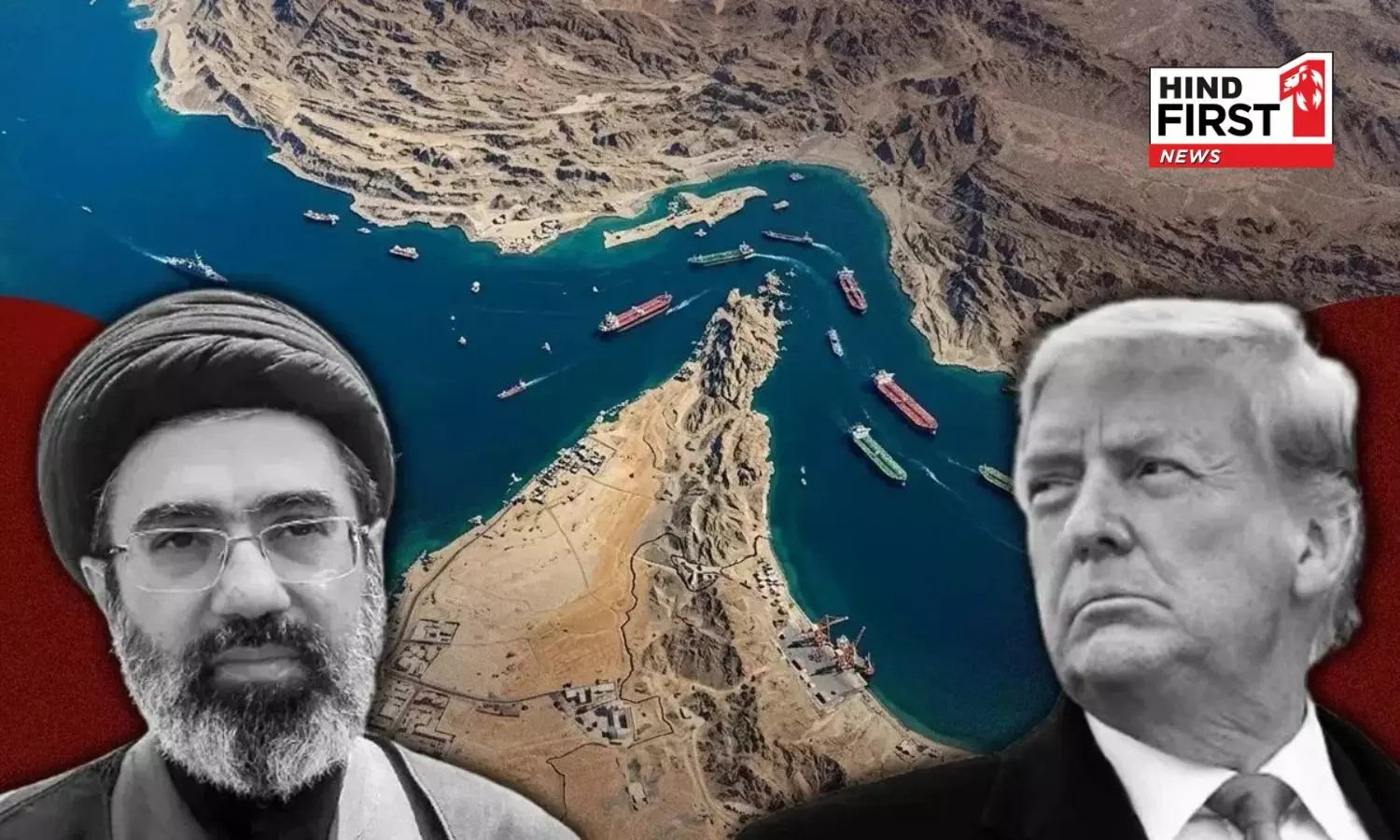
Following the failure of negotiations in Islamabad, the U.S. has announced a complete closure of the Strait of Hormuz. To enforce this, the U.S. is deploying its submarines and warships to the Gulf of Oman. President Donald Trump has asserted that, at any cost, Iran will not be permitted to generate revenue from the Strait of Hormuz.
Throughout the ongoing conflict, Iran had previously been allowing cargo vessels to traverse this route in exchange for the payment of tolls.
This action by the U.S. has resulted in a total blockade of the Strait of Hormuz; not a single vessel can now pass through this route. Consequently, the question arises: who possesses the capability to reopen this passage now? This is a critical issue, given that the route has already remained closed for the past 45 days.
"Situation Akin to Being "Between a Rock and a Hard Place"
On one hand, Iran has been permitting only those vessels to exit the Strait of Hormuz that belong to nations with which it maintains diplomatic relations and which are capable of paying the requisite tolls. As a result, more than 650 cargo vessels are already stranded within the Strait of Hormuz.
Now, on the other hand, the U.S. has issued a declaration stating that it will strike down any vessels attempting to traverse the strait.
The Big Question: Who Will Broker a Truce Between the Two Sides? Following the failure of peace talks in Islamabad, the question now arises: who will broker peace negotiations between Iran and the United States? This is because the chasm separating the two nations is quite deep. In Islamabad, U.S. Vice President J.D. Vance was unable to reach any substantive point of agreement during the discussions, prompting the United States to withdraw from the talks.
Nevertheless, a renewed effort toward a peace settlement has now commenced. This initiative is unfolding on three distinct levels:
1. Russia has taken the initiative to broker an agreement between Iran and the United States. President Vladimir Putin has held a telephone conversation with Iranian President Masoud Pezeshkian.
Putin also maintains a good rapport with U.S. President Trump. If Putin personally involves himself in this diplomatic endeavor, a breakthrough could be achieved, given that Iran is regarded as a close ally of Russia.
2. In a statement, French President Emmanuel Macron indicated that France could potentially play a role in the ceasefire process. He emphasized that peace in the Middle East is imperative, and to that end, ensuring the openness of the Strait of Hormuz is essential.
Macron further stated that France would engage in discussions with the United Kingdom regarding the blockade of the Strait of Hormuz, with plans to subsequently bring other nations into the fold. Macron also voiced his support for the independence of Lebanon.
3.Turkey has initiated a fresh round of dialogue through back-channel diplomatic channels. Turkish Foreign Minister Hakan Fidan has held a telephone conversation with his Pakistani counterpart. Turkey seeks a response from Iran regarding the proposal previously put forward by the United States, in order to pave the way for the commencement of a second round of negotiations.


