
Tarique Rahman takes oath as Bangladesh Prime Minister, but did Yunus win the real battle?
The BNP (Bangladesh Nationalist Party) won the February 12 elections, and Tariq Rahman has now become Prime Minister.

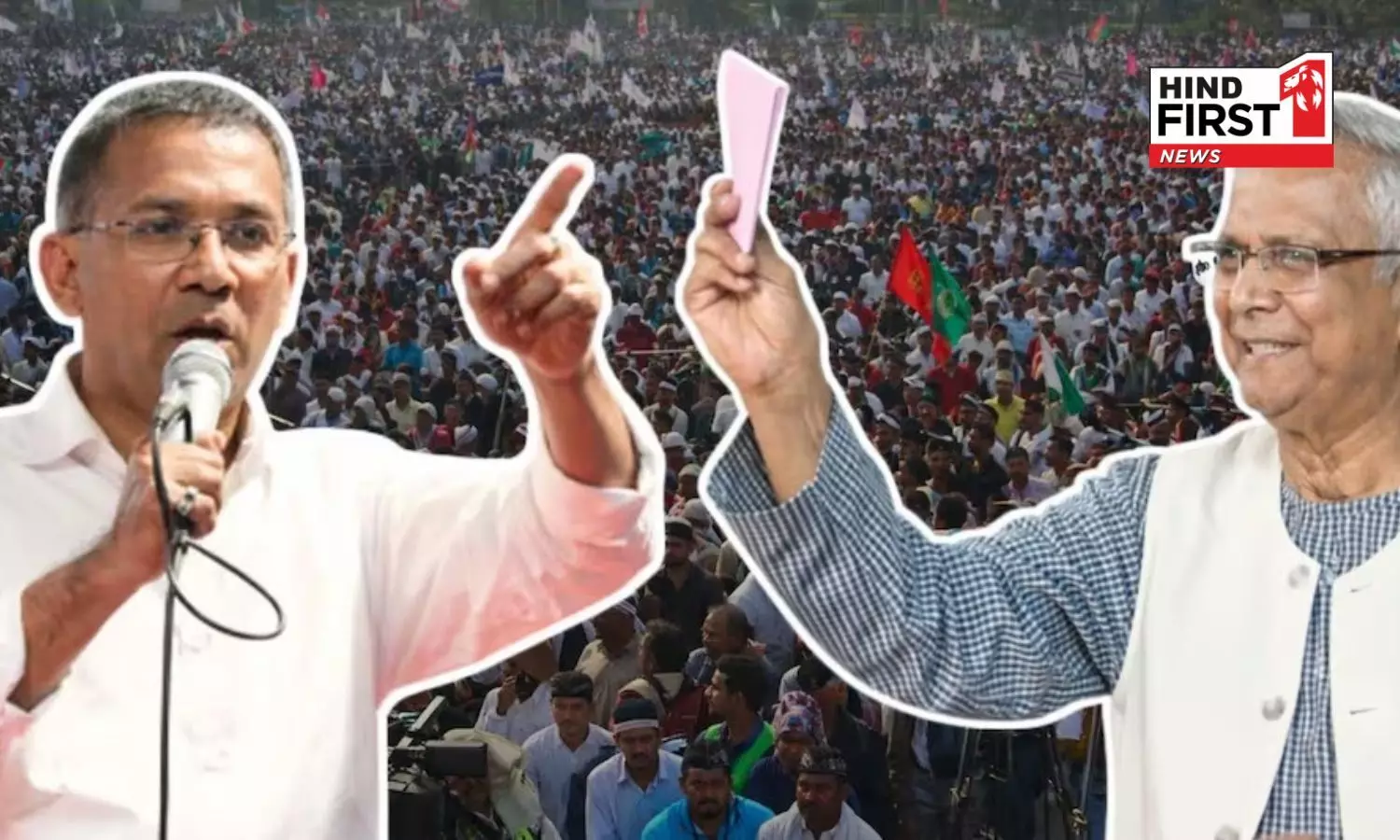
While all eyes were focused on the political contest between Khaleda Zia and Sheikh Hasina, another major game was unfolding in Bangladesh. On one side was Prime Minister Sheikh Hasina, and on the other, Nobel laureate Muhammad Yunus, who lacked power but wielded influence. Now, Khaleda Zia's son, Tariq Rahman, has been sworn in as Prime Minister, but if anyone has emerged as the biggest winner in the past 18 months, it is Yunus.
In fact, the political turmoil in Bangladesh that began in July-August 2024, with the anti-quota student movement, which then escalated into a government change, violence, Sheikh Hasina's forced relinquishment of power, and the sudden emergence of Mohammad Yunus as head of the interim administration, all happened very quickly. In September 2024, Yunus himself stated that the movement to remove Hasina was "carefully planned."
Yunus's 18-Month Innings
The 85-year-old Yunus led the interim administration for 18 months. During this time, he made several major decisions, such as passing laws through presidential ordinances, signing a trade deal with the United States, announcing elections in February 2026 (while the Army Chief had wanted December 2025), and finally holding the elections.
The BNP (Bangladesh Nationalist Party) won the February 12 elections, and Tariq Rahman has now become Prime Minister. But interestingly, Yunus conducted these elections by excluding Sheikh Hasina's party, the Awami League, and even secured Western recognition for the election as "inclusive."
Decades-old rivalry with Hasina
The rivalry between Mohammad Yunus and Sheikh Hasina is not new. When the military-backed interim government came to power in 2007, an attempt was made to keep both Hasina and Khaleda Zia out of politics under the "minus two formula." Yunus was considered a potential prime ministerial candidate at the time, but that plan did not move forward.
Hasina returned to power in 2009, and legal action was subsequently initiated against Yunus. In January 2014, he was sentenced to six months in prison in the Graeme Telecom case. Critics called it political retaliation.
Was Yunus successful?
Yunus attempted to manage the economy and conduct elections, but questions were raised about law and order. Attacks on minorities, mob violence, and political killings continued. He also compromised on women's rights under pressure from Islamic organizations.
Suspense over the July Charter
Yunus's major agenda was the "July Charter." A referendum was held on it, which received 62% support. Its purpose was to empower Parliament to function as a Constituent Assembly for 180 days to make changes to the Constitution and democratic processes.
How did Yunus get his way?
Yunus did not have his own political party. He was called upon by student leaders to head the interim government. Nevertheless, he managed to bring together the BNP, Jamaat-e-Islami, and other Islamic organizations on several issues.
He also received the support of the youth. According to political analysts, Yunus, through his small team of trusted advisors, made swift decisions, such as ordinances related to data security, data privacy, and cloud computing.
What will Yunus do next?
Now that the elected government has been sworn in, Yunus has resigned as interim head. Some speculated that he might become president, but this is unlikely under a BNP government.
Summary
The turmoil in Bangladesh's politics, which began in July-August 2024, with the anti-quota student movement, which then escalated into a government change campaign, violence, Sheikh Hasina's forced relinquishment of power, and the sudden emergence of Muhammad Yunus as head of the interim administration, all happened very quickly.


