
Trump's 'mood swing' again... Raises global tariffs to 15%: What it means for India
US President Donald Trump has announced a proposed increase in tariffs on global imports from 10% to 15%. This move has created new uncertainty in global trade and India-US trade relations.

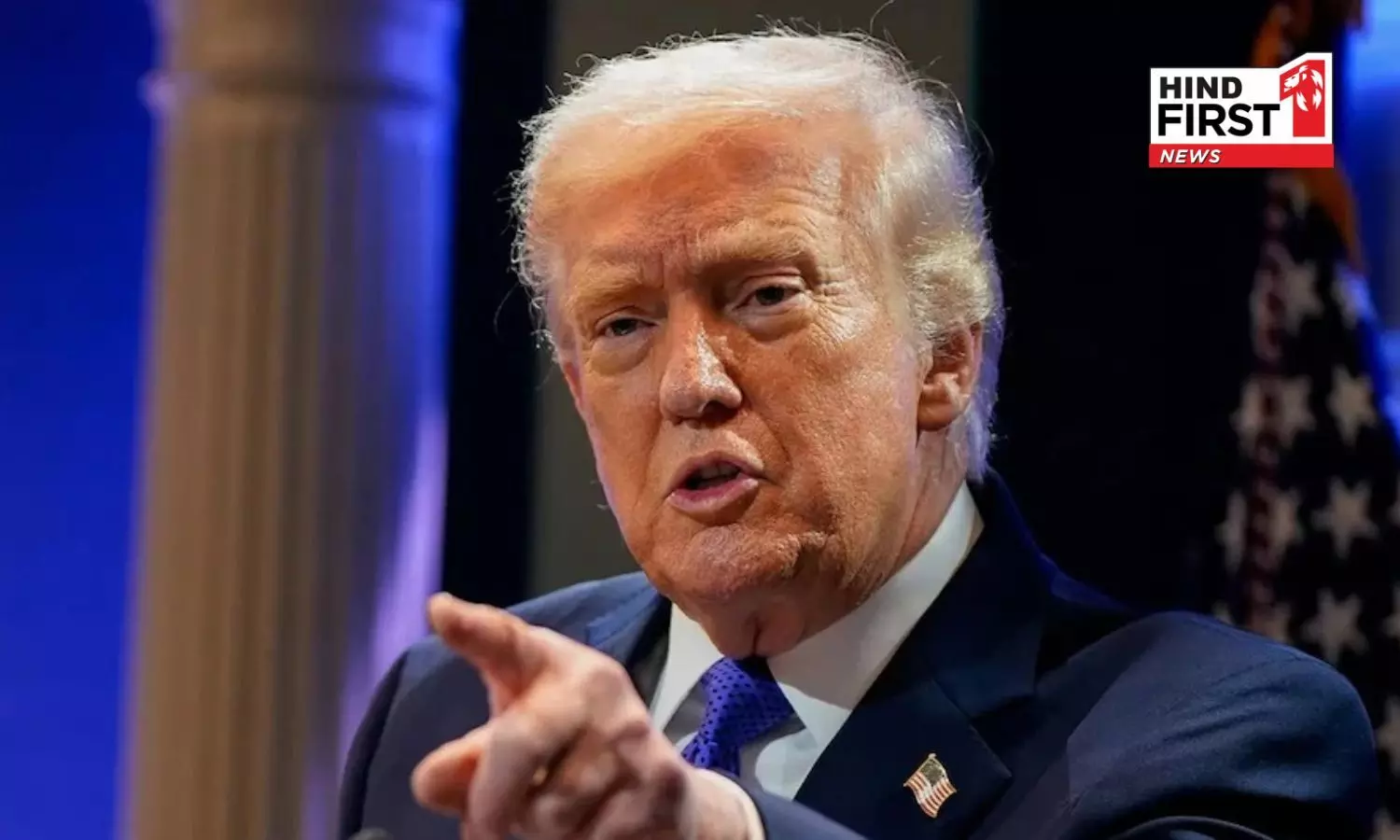
Even US President Donald Trump himself is unaware of his next decision. It would be no exaggeration to say that Trump's decisions are influenced by his 'mood swings'. The latest example is his announcement regarding global tariffs. In a social media post on Saturday, Trump announced that he would increase the proposed tariffs on global imports from 10% to 15%. Just a day earlier, he had announced a 10% tariff.
In a social media post, Trump stated that he had made this decision based on a thorough, detailed, and complete review of the US Supreme Court decision. He described the Supreme Court's decision as "absurd, poorly written, and exceptionally anti-American." However, this tariff will only be in effect for 150 days, and to make it permanent, the Trump administration will need to pass legislation in the US Congress.
What will Change for India?
This latest move by Trump has increased uncertainty regarding tariffs. Last year, the US imposed a 25% reciprocal tariff on India. Additionally, it imposed an additional 25% tariff on India for purchasing oil from Russia, bringing the total tariff to 50%. Following the agreement on an interim trade agreement framework between the two countries in February 2026, the Trump administration reduced the tariff on Indian imports from 50% to 18%.
Trump's 'Mood Swing' Again
Following the US Supreme Court's decision, all tariffs imposed by Trump were invalidated, which had indicated that tariffs on Indian imports could also be reverted to the previous 3.5% level. However, after Trump's announcement of a 15% global tariff, the tariff on Indian imports will remain at approximately 18.5%, a 0.5% increase from the current 18%.
Supreme Court's Decision and Trump's Response
On February 20, 2026, the US Supreme Court declared the sweeping tariffs imposed by Donald Trump invalid. This decision came by a 6-3 majority. The Supreme Court held that the International Emergency Economic Powers Act (IEEPA)—a 1977 law that grants the president the power to make certain economic decisions in the event of a national emergency—does not authorize the imposition of tariffs. Following this Supreme Court ruling, the tariffs imposed by Donald Trump on various countries became ineffective.
Global tariffs raised from 10% to 15%
Trump had declared a national emergency under this law and imposed tariffs on several countries (such as China, Canada, Mexico, India, etc.) based on drug trafficking and trade deficits. These included tariffs ranging from 10% to 25%, applicable to almost all imports. The Supreme Court rejected this, calling it unbridled presidential power, because the US Constitution grants Congress, not the president, the authority to impose taxes and duties (tariffs) (without clear legal basis).
Summary
This decision is a major blow to Donald Trump's economic policy. It could pave the way for refunds of billions of dollars (estimated at $130-175 billion or more) collected by the Trump administration through tariffs. The case has now been sent back to the Court of International Trade (CIT), where decisions on refunds and other matters will be made. Trump criticized the decision, calling the judges "disloyal to the Constitution." However, he praised the dissenting judges. Trump wrote, "My new heroes are Justice Brett Kavanaugh, and Justices Clarence Thomas and Samuel Alito. They fully believe in the spirit of Make America Great Again."


